
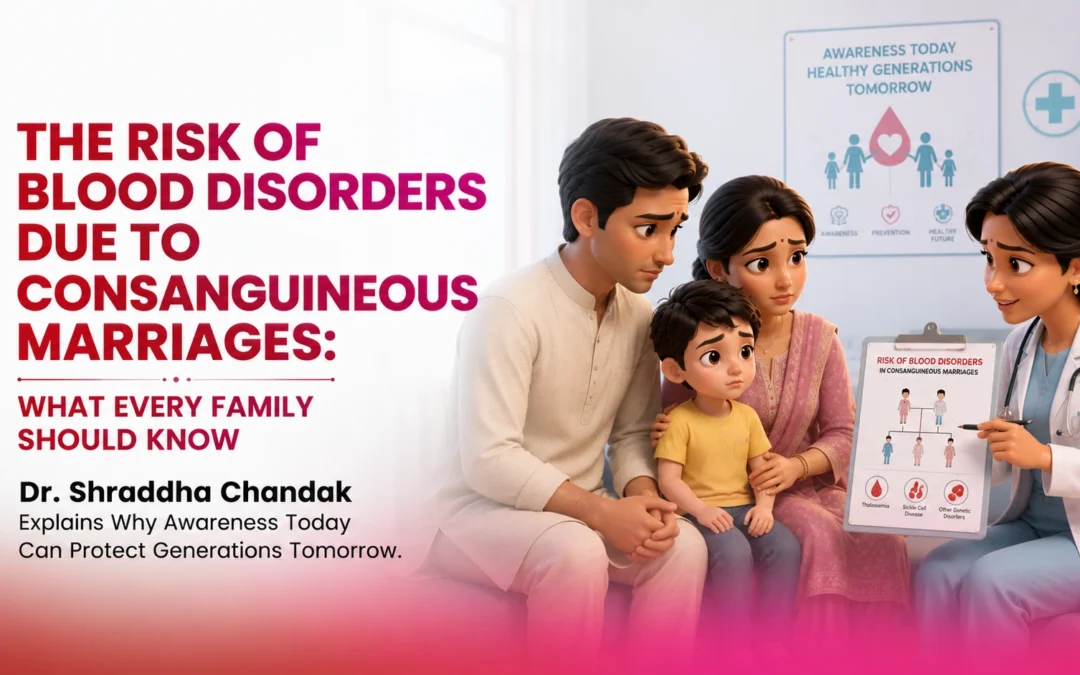
When two people decide to get married, they usually think about compatibility, family values, careers, and future plans. But there’s one conversation that often gets ignored—how closely related the couple is by blood, and whether that could affect the health of their future children.
This is where consanguineous marriages come into the picture.
Many families have followed this tradition for generations, often to preserve family ties, cultural values, or property. While these reasons are understandable, modern medical science has shown that marriages between close relatives can increase the risk of several inherited conditions, especially genetic blood disorders.
This isn’t about judging traditions. It’s about making informed decisions and giving every child the healthiest possible start in life.
Let’s understand why this happens and what every couple should know before planning a pregnancy.
What Is a Consanguineous Marriage?
A consanguineous marriage refers to a marriage between two people who are biologically related, usually first cousins or second cousins.
Since close relatives share a significant portion of their genes, they are also more likely to carry the same genetic mutations. While these mutations may never cause any health problems in the parents, they can become a concern when passed on to their children.
Think of it this way.
Every one of us carries a few faulty genes. Most of the time, they remain hidden because we also have a healthy copy of that gene. Problems arise only when a child inherits the faulty copy from both parents.
The chances of this happening are much higher when the parents are related by blood.
Why Are Blood Disorders More Common in Consanguineous Marriages?
Many inherited blood disorders follow what doctors call an autosomal recessive inheritance pattern.
Here’s a simple example.
Imagine both parents carry one defective gene for thalassemia but are perfectly healthy themselves.
For every pregnancy, there is:
- 25% chance the baby will have the disease
- 50% chance the baby will become a healthy carrier
- 25% chance the baby will inherit no defective gene at all
These odds remain the same with every pregnancy.
When unrelated people marry, the likelihood of both carrying the exact same faulty gene is relatively low.
When close relatives marry, those chances become significantly higher.
Which Blood Disorders Are Commonly Seen?
Several inherited blood disorders are more frequently seen in communities where consanguineous marriages are common.
- Thalassemia
One of the most common inherited blood disorders in India.
Children with severe thalassemia may require:
- Regular blood transfusions
- Iron chelation therapy
- Lifelong medical care
- Bone marrow transplant in selected cases
Without proper treatment, the disease can become life-threatening.
- Sickle Cell Disease
Sickle cell disease changes the shape of red blood cells, making them rigid instead of flexible. This can lead to:
- Severe pain episodes
- Frequent infections
- Stroke
- Organ damage
- Chronic anaemia
Certain regions of India have a particularly high prevalence of sickle cell disease.
- Rare Inherited Anaemias
Several uncommon genetic anaemias become more prevalent in closely related marriages. These conditions may cause:
- Poor growth
- Fatigue
- Delayed development
- Frequent hospital admissions
- Bleeding Disorders
Some inherited bleeding disorders are also passed through families.
Children may experience:
- Easy bruising
- Nosebleeds
- Excessive bleeding after injuries
- Joint bleeding
- Serious complications during surgery
Does Every Consanguineous Marriage Result in a Child With a Blood Disorder?
No.
However, the risk is significantly higher compared to marriages between unrelated individuals.
That’s why doctors recommend genetic counselling—not because something is definitely wrong, but because prevention is always better than treatment.
Can Carrier Screening Help?
Absolutely.
Carrier screening is one of the most powerful tools available today.
It is a simple blood test that identifies whether a person carries genes for inherited disorders like thalassemia or sickle cell disease.
If both partners are found to be carriers of the same condition, they can receive expert guidance about:
- Pregnancy planning
- Prenatal diagnosis
- Reproductive options
- Early treatment planning
Knowledge empowers families to make informed choices.
Why Is Genetic Counselling So Important?
Many people assume genetic counselling is only for couples who already have an affected child. That’s not true.
It is actually most useful before pregnancy.
A genetic counsellor reviews:
- Family history
- Previous pregnancies
- Medical history
- Community-specific risks
- Carrier screening results
Based on this, couples receive personalised information about their risk and available options.
What Symptoms Should Parents Watch For?
Some inherited blood disorders may become noticeable during infancy or early childhood. Signs include:
- Persistent paleness
- Poor weight gain
- Delayed growth
- Yellowish eyes
- Enlarged spleen
- Frequent infections
- Fatigue
- Excessive bruising
- Repeated need for blood transfusions
If a child has these symptoms, early evaluation by a haematologist is essential.
Can These Disorders Be Prevented?
While inherited genes cannot be changed, many affected pregnancies can be identified early through proper planning.
Important preventive steps include:
Premarital counselling
Especially if the couple is related or has a family history of blood disorders. Carrier screening
Simple blood tests before marriage or pregnancy can identify carriers.
Prenatal diagnosis
If both parents are carriers, specialised testing during pregnancy can determine whether the baby has inherited the disorder.
Family awareness
Open discussions within families can help future generations understand genetic risks.
Is This Relevant Only to Certain Communities?
No.
Although consanguineous marriages are more common in some cultures and regions, inherited blood disorders can affect people from every community.
Anyone with:
- A family history of blood disorders
- Repeated miscarriages
- An affected child
- Marriage within the extended family
should consider genetic counselling before planning a pregnancy.
Final Thoughts
Consanguineous marriages have been a part of many cultures for generations. However, today’s medical knowledge gives us an opportunity that previous generations never had—the ability to understand inherited risks before pregnancy.
If you or someone in your family is planning a marriage between close relatives, don’t rely on assumptions or hearsay. A simple consultation with a haematologist or genetic counsellor, along with appropriate screening tests, can provide clarity and peace of mind.
After all, the healthiest future begins with informed choices today.
The Bottom Line
Most children will never need a pediatric hematology, oncology, or immunology specialist. But some children should not wait.
Persistent anemia, recurrent infections, abnormal blood reports, unexplained fevers, poor growth, enlarged lymph nodes, and unusual bleeding symptoms are all situations where timely evaluation can make a meaningful difference.
The goal is not to overreact to every symptom.
The goal is to recognize when a problem deserves a closer look.
Because in pediatric healthcare, early answers are often far more valuable than delayed reassurance.