
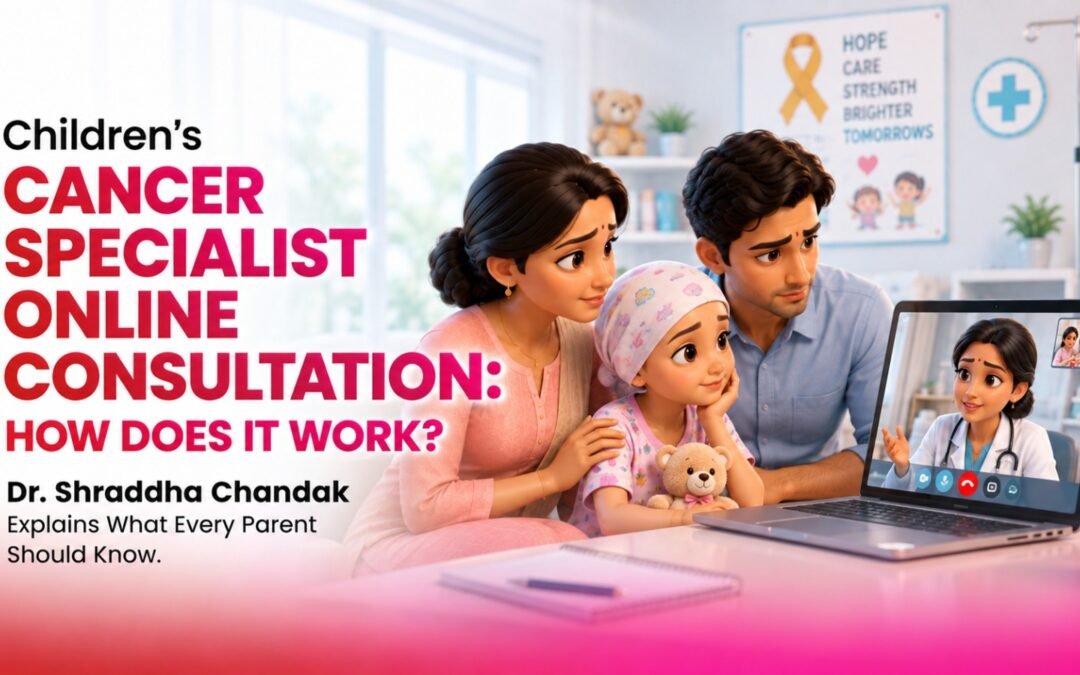
Your child needs a cancer specialist. But does getting an expert opinion always mean travelling immediately?
When a child is diagnosed with cancer—or when a serious blood or tumour-related condition is suspected—parents often have countless questions.
What does the report mean?
Do we need more tests?
What treatment options are available?
Should we get a second opinion?
A pediatric cancer specialist online consultation can help families discuss these concerns with a specialist from the comfort of home.
What Is an Online Pediatric Oncology Consultation?
An online pediatric oncology consultation allows parents to speak with a pediatric oncologist through a virtual appointment.
The specialist can review available medical records, discuss the child’s history, explain reports and help parents understand possible next steps.
It can be particularly useful for:
- Understanding a new diagnosis
- Reviewing pathology or biopsy reports
- Discussing scans and blood investigations
- Getting a second opinion for childhood cancer
- Understanding treatment options
- Discussing treatment-related concerns
- Planning further specialist care
However, online consultation does not replace emergency medical care or every physical examination. Some situations require an in-person assessment.
How Does the Process Work?
1. Book the Consultation
Parents can schedule an appointment and provide basic information about their child and the reason for seeking specialist advice.
2. Keep the Reports Ready
Before the appointment, keep all relevant documents together.
These may include:
CBC and blood tests • biopsy/pathology reports • scans • prescriptions • discharge summaries • previous treatment records
Having reports organised chronologically can make the consultation much more useful.
3. Discuss Your Child’s History
The specialist may ask about symptoms, diagnosis, previous treatments, medications, investigations and the child’s overall health.
This helps the doctor understand the complete clinical picture, rather than interpreting one report on its own.
4. Ask Questions
This is your opportunity to ask the questions you may have been afraid or unsure to ask:
“What exactly does this diagnosis mean?”
“Do we need another test?”
“What treatment options should we know about?”
“Should we consider a second opinion?”
5. Understand the Next Steps
After reviewing the available information, the specialist can explain the possible next steps, including whether additional investigations, an in-person examination or further specialist care may be required.
When Can an Online Consultation Help Most?
A pediatric oncology teleconsultation can be especially helpful when families need expert guidance before making major decisions, want another perspective on a diagnosis, or need help understanding complex medical reports.
It can also make specialist conversations more accessible for families who live far from specialised pediatric cancer centres.
A Small Reminder for Parents
You don’t need to understand every medical term before speaking to a specialist.
Bring your questions. Bring your reports. Bring your concerns.
A good consultation is not only about discussing a diagnosis—it is about helping parents understand what is happening, what needs to happen next, and why.