
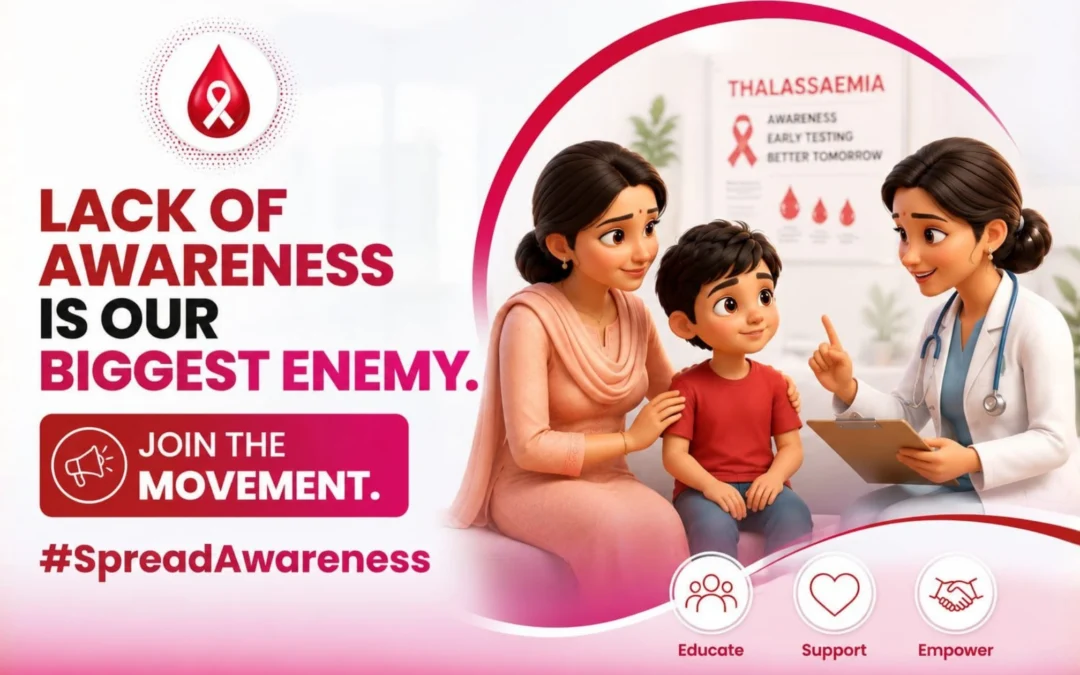
Frequently Asked Questions Answered by Dr. Shraddha Chandak
Pediatric Hematology, Oncology & Immunology Specialist
In the fight against Thalassaemia, one of the biggest challenges today is not just the disease itself.
It is the lack of awareness surrounding it.
Despite being one of the most common inherited blood disorders in India, many families still do not know:
- What Thalassaemia is
- How it spreads genetically
- Why screening matters
- How early diagnosis can help
- That prevention is possible
As a result, many children continue to be diagnosed late, families remain unprepared, and opportunities for prevention are missed.
This is why awareness is not optional anymore.
It is essential.
Why Is Awareness About Thalassaemia So Important?
Awareness directly affects:
- Early diagnosis
- Timely treatment
- Prevention through screening
- Long-term outcomes
When families understand the condition early, they are more likely to:
- Seek proper medical care
- Continue regular treatment
- Avoid complications
- Make informed decisions
In many cases, awareness itself becomes the first step towards better healthcare.
What Exactly Is Thalassaemia?
Thalassaemia is a genetic blood disorder that affects the body’s ability to produce healthy hemoglobin.
Children with Thalassaemia Major often require:
- Regular blood transfusions
- Ongoing monitoring
- Chelation therapy
- Long-term pediatric hematology care
Without proper treatment, severe anemia and complications can develop.
Why Do Many Families Still Discover Thalassaemia Late?
One of the biggest reasons is that early symptoms are often ignored.
Common symptoms of Thalassaemia in children include:
- Persistent paleness
- Fatigue
- Delayed growth
- Poor appetite
- Weakness
- Recurrent illness
In many cases, families may initially assume the child simply has poor nutrition or general weakness.
Lack of awareness delays proper diagnosis.
Can Thalassaemia Be Prevented?
In many cases, yes.
If both parents carry Thalassaemia Trait, there is a possibility that the child may develop Thalassaemia Major.
Preventive steps include:
- Premarital screening
- Carrier testing
- Genetic counselling
- Prenatal diagnosis
Unfortunately, many people are still unaware of the importance of Thalassaemia screening before marriage or pregnancy.
This is where public awareness becomes critical.
Why Is Screening Important Even If There Are No Symptoms?
A person carrying Thalassaemia Trait may appear completely healthy.
Without screening:
- Carrier status may remain unknown
- Future risk to children may go unnoticed
Simple blood tests can help identify carriers early.
Awareness and testing can significantly reduce future disease burden.
What Challenges Do Families Face During Treatment?
Managing Thalassaemia treatment involves:
- Regular blood transfusions
- Chelation therapy
- Frequent hospital visits
- Financial burden
- Emotional stress
Families often require long-term support systems to continue treatment consistently.
Organizations like the Happy Kids Foundation work towards supporting children and families through:
- Blood transfusion support
- Counselling
- Medical guidance
- Access to treatment assistance
- Awareness initiatives
Why Does Society Need to Talk More About Thalassaemia?
Many families dealing with Thalassaemia still struggle with:
- Social stigma
- Lack of information
- Delayed referrals
- Limited awareness in communities
Open conversations help:
- Increase understanding
- Encourage screening
- Promote early diagnosis
- Build support systems for families
Awareness creates action.
And action changes outcomes.
How Can Individuals Contribute to Awareness?
Everyone can play a role.
Simple ways to help:
- Spread awareness about carrier screening
- Encourage blood donation
- Share accurate information
- Support families undergoing treatment
- Participate in awareness campaigns
Small conversations can create large impact.
Why Is #SpreadAwareness So Important?
Because awareness saves lives before treatment even begins.
The goal is not only treating children already diagnosed with Thalassaemia.
The larger goal is:
- Early identification
- Better support
- Stronger awareness
- Prevention in future generations
The more informed society becomes, the stronger the fight against Thalassaemia becomes.
Final Thoughts from Dr. Shraddha Chandak
In Thalassaemia care, medicine alone is not enough.
Awareness, education, screening, and community participation are equally important.
The biggest enemy today is not lack of treatment.
It is lack of awareness.
And that is something society can change together.
#SpreadAwareness