
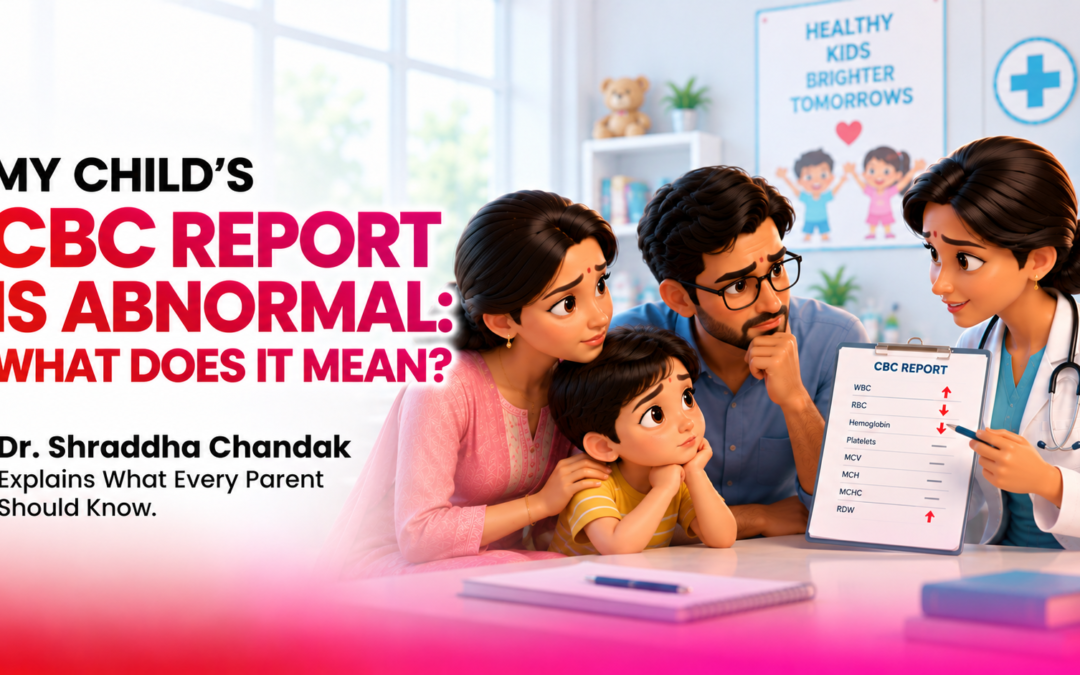
You receive your child’s blood test report, open it on your phone, and notice a few values marked in red. The haemoglobin is low, the white blood cell count is high, or the platelet count is outside the laboratory’s reference range.
Naturally, questions follow. Is this serious? Could it be an infection? Should the test be repeated? Does my child need treatment?
An abnormal complete blood count (CBC) does not automatically mean your child has a serious illness. However, understanding which values are abnormal and whether your child has symptoms is important.
Dr. Shraddha Chandak, Pediatric Hemato-Oncologist and Immunologist, can help parents understand their child’s blood report and determine the appropriate next steps.
What Does a CBC Report Tell You?
A CBC measures different components of the blood. Each provides useful information about your child’s health.
Haemoglobin (Hb): Low haemoglobin may indicate anaemia. Possible causes include iron deficiency, nutritional problems, inherited blood disorders, or other underlying conditions.
White blood cells (WBCs): These cells help fight infections. Their count may increase or decrease due to infections, medications, immune conditions, or disorders affecting blood cell production.
Platelets: These help blood clot. A low platelet count may increase bleeding risk, while a high count can occur with infections, inflammation, iron deficiency, and other conditions.
Red blood cell indices: Values such as MCV and MCH help doctors understand the size and haemoglobin content of red blood cells. They can provide clues about different types of anaemia.
Importantly, a report must be interpreted according to your child’s age, symptoms, medical history, and the laboratory’s reference ranges.
Why Can an Apparently Healthy Child Have an Abnormal CBC?
Children can look active and healthy even when their blood reports show an abnormality. Some changes are temporary, particularly during or after an infection. Others may need further investigation.
For example, mildly reduced haemoglobin and a significantly low platelet count require different approaches. Similarly, a high white blood cell count during an infection may have a different explanation from persistent abnormalities accompanied by unexplained bruising, prolonged fever, or unusual fatigue.
This is why self-diagnosing from a report or comparing your child’s results with another child’s report can be misleading.
What Should You Keep Ready for a Consultation?
A teleconsultation can be useful when you need an expert opinion on abnormal blood counts, previous investigations, or the need for additional tests.
During an online consultation, Dr. Shraddha Chandak can review the available CBC report, discuss symptoms and medical history, explain possible reasons for abnormal values, and guide you regarding further investigations or an in-person assessment.
Keep these documents ready:
- The latest CBC report, including differential counts and red blood cell indices.
- Previous blood reports, if available.
- Your child’s symptoms and how long they have been present.
- Current medications and supplements.
- Previous diagnoses and relevant family history.
Do not start iron supplements, antibiotics, or other medicines solely because a report shows an abnormal value.
When Should You Seek Immediate Medical Attention?
Seek urgent medical evaluation if your child has significant bleeding, difficulty breathing, fainting, severe weakness, unusual drowsiness, or appears seriously unwell.
A very abnormal blood count, especially when accompanied by persistent fever, unexplained bruising, or marked paleness, also warrants prompt medical advice.
An online consultation should not delay emergency assessment or investigations that require an in-person visit.
Consult Dr. Shraddha Chandak
An abnormal CBC can raise many questions, but it does not provide a diagnosis on its own.
If your child’s blood report has unusual values, an expert review can help you understand what they may mean, whether further testing is necessary, and how to proceed.
Visit drshraddhachandak.com to enquire about a paediatric haematology consultation and discuss your child’s reports.
Disclaimer: This article provides general educational information and is not a substitute for individual medical advice.