
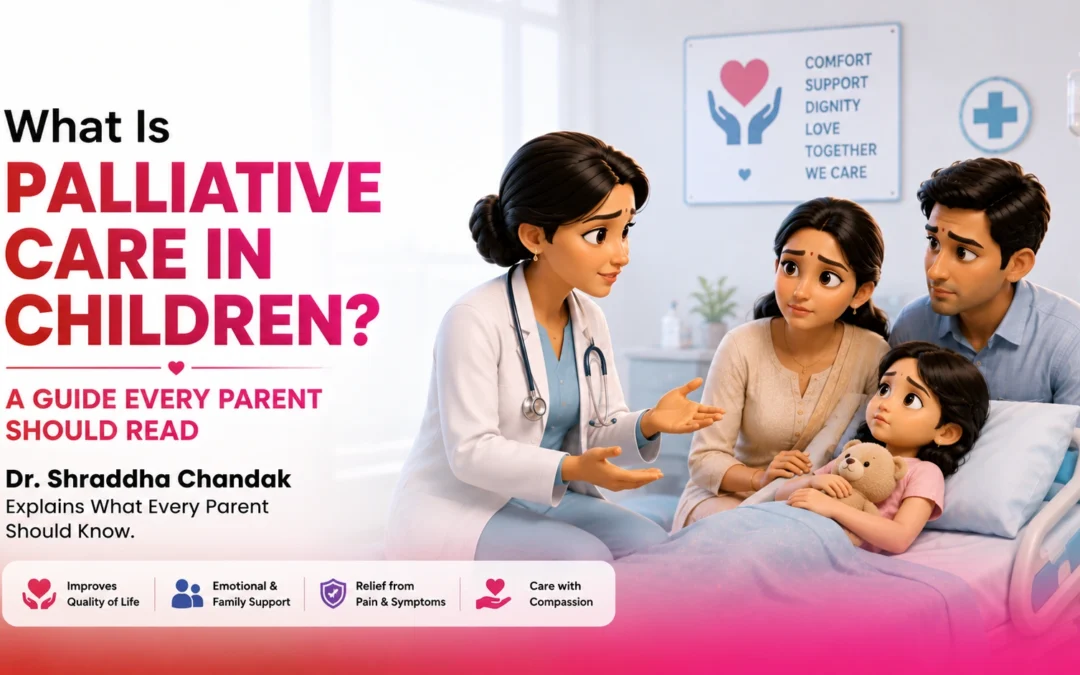
When parents hear the words “palliative care,” their hearts often sink. Many immediately think it means there is no hope left.
But here’s something that surprises most families: Palliative care is not about giving up. It’s about helping children live as comfortably, happily, and meaningfully as possible—while they continue receiving medical treatment.
In fact, many children receive palliative care alongside treatments that aim to cure or control their illness. If your child has a serious medical condition, understanding palliative care could make one of the most difficult journeys a little less overwhelming.
Let’s talk about what it really means.
What Is Pediatric Palliative Care?
Pediatric palliative care is specialised medical care that focuses on improving the quality of life of children with serious or life-limiting illnesses.
The goal isn’t just to treat the disease.
It’s also to care for the child as a whole by helping manage:
- Pain
- Breathlessness
- Nausea and vomiting
- Fatigue
- Anxiety
- Emotional distress
- Sleep problems
- Feeding difficulties
- Family stress
Palliative care also supports parents, siblings, and caregivers throughout the child’s healthcare journey.
Does Palliative Care Mean My Child Is Dying?
No. This is one of the biggest myths. Many children receive palliative care from the time they are diagnosed, even while they continue treatments such as:
- Chemotherapy
- Blood transfusions
- Surgery
- Stem cell transplantation
- Immunotherapy
- Targeted therapy
- Other disease-specific treatments
Palliative care and curative treatment often work together.
Which Children May Benefit From Palliative Care?
Palliative care can help children with many serious illnesses, including: Blood Disorders
- Thalassemia major
- Sickle cell disease
- Severe aplastic anaemia
- Bone marrow failure syndromes
Childhood Blood Cancers
- Leukaemia
- Lymphoma
- Relapsed blood cancers
Genetic Disorders
Certain inherited conditions that require long-term medical support.
Neurological Conditions
Children with severe neurological illnesses may also benefit from symptom management and supportive care.
What Does a Pediatric Palliative Care Team Do?
Think of them as partners in your child’s care.
The team may include:
- Haematologists
- Paediatricians
- Nurses
- Pain specialists
- Psychologists
- Nutritionists
- Physiotherapists
- Social workers
- Counsellors
Together, they focus on helping children feel as well as possible.
How Does Palliative Care Help a Child?
Every child’s needs are different.
Some children may need better pain control.
Others may need help managing symptoms caused by their disease or treatment. Palliative care may help with:
Pain Management
Keeping children comfortable is always a priority.
Doctors use age-appropriate medications and techniques to control pain safely.
Managing Treatment Side Effects
Children undergoing chemotherapy or repeated blood transfusions may experience:
- Nausea
- Weakness
- Loss of appetite
- Mouth ulcers
- Constipation
- Fatigue
Managing these symptoms can significantly improve daily life.
Emotional Support
Serious illness affects more than the body.
Children may feel:
- Fear
- Loneliness
- Frustration
- Anger
- Sadness
Parents often experience overwhelming emotional stress as well.
Professional counselling helps families cope together.
Nutritional Guidance
Some illnesses make eating difficult.
Nutrition experts help ensure children receive adequate nourishment while considering their individual needs.
Better Communication
Medical decisions can be confusing.
Palliative care teams help families understand:
- Treatment options
- Expected outcomes
- Possible complications
- Future planning
This allows parents to make informed decisions with confidence.
Is Palliative Care Only for Cancer Patients?
Not at all.
Although it is commonly associated with cancer, pediatric palliative care benefits children with many non-cancer illnesses, including inherited blood disorders that require lifelong treatment.
For example:
A child with thalassemia receiving regular blood transfusions may benefit from support for pain, fatigue, emotional wellbeing, and family counselling—even though the goal remains long-term treatment.
When Should Palliative Care Begin?
Earlier than most people think.
Many experts recommend introducing palliative care at the time of diagnosis for serious illnesses rather than waiting until symptoms become severe.
Early involvement often leads to:
- Better symptom control
- Improved quality of life
- Reduced stress for families
- Better communication with healthcare teams
- More coordinated care
Can Children Still Go to School and Play?
Absolutely.
One of the goals of pediatric palliative care is helping children continue doing the things they enjoy whenever possible.
Depending on their health, many children continue to:
- Attend school
- Play with friends
- Celebrate birthdays
- Travel
- Participate in hobbies
- Spend quality time with family
Childhood shouldn’t disappear because of illness.
How Is Palliative Care Different From Hospice Care?
People often confuse these two terms.
Palliative care can begin at any stage of a serious illness and may be provided alongside treatments aimed at cure or disease control. Hospice care is generally reserved for situations where the focus shifts entirely to comfort during the final stage of life. Understanding this difference helps families seek support much earlier.
Final Thoughts
“One of the biggest misconceptions I encounter is that palliative care is only for the final stages of an illness. In reality, it is about improving a child’s quality of life from the very beginning of their medical journey. Whether a child is living with thalassemia, sickle cell disease, leukaemia, or another serious blood disorder, good care is not just about treating the disease—it is also about managing pain, reducing emotional stress, supporting families, and helping children experience as much of a normal childhood as possible. No family should feel they have to face these challenges alone. Seeking palliative care early is not a sign of giving up; it is a step towards providing compassionate, comprehensive care for your child.”