
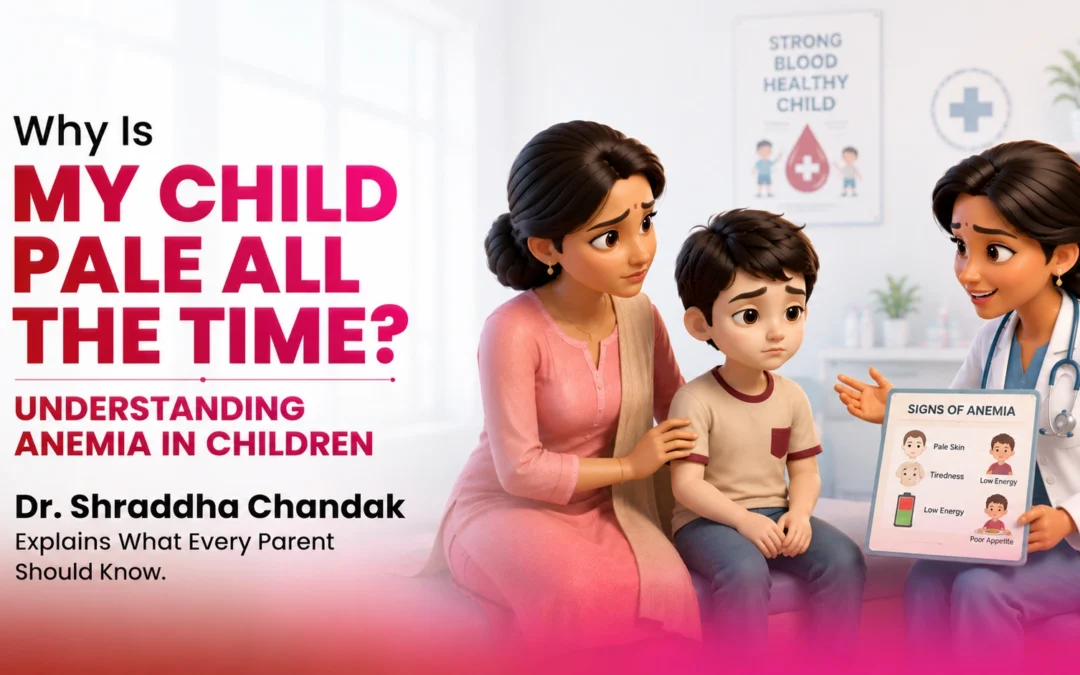
“Everyone keeps telling me my child looks pale.”
For many parents, this observation starts casually. A relative mentions it during a family gathering. A teacher notices that the child seems tired. Sometimes, parents themselves begin to wonder why their child’s face lacks its usual healthy color.
Paleness is one of the most common reasons children are brought for medical evaluation.
While some children naturally have lighter complexions, persistent paleness can sometimes be a sign of anemia—a condition that affects millions of children worldwide.
The good news is that most cases of childhood anemia can be diagnosed and treated effectively once the cause is identified.
What Is Anemia?
Anemia occurs when the body does not have enough healthy red blood cells or adequate hemoglobin to carry oxygen efficiently.
Hemoglobin is the protein inside red blood cells responsible for transporting oxygen throughout the body.
When hemoglobin levels fall, the body’s tissues receive less oxygen, which can affect energy levels, growth, concentration, and overall health.
What Does Anemia Look Like in Children?
Many parents expect anemia to cause dramatic symptoms.
In reality, anemia often develops gradually, and children adapt surprisingly well. Common signs include:
- Pale skin
- Pale lips
- Pale gums
- Fatigue
- Reduced stamina
- Irritability
- Poor concentration
- Frequent headaches
- Dizziness
- Reduced appetite
Some children may appear completely normal despite having significantly low hemoglobin levels.
This is why blood testing is often necessary for diagnosis.
Why Are Children Commonly Affected by Anemia?
Children undergo rapid growth, which increases their nutritional requirements. When these needs are not fully met, anemia can develop.
Common causes include:
Iron Deficiency
This is the most common cause of anemia in children.
Iron is essential for hemoglobin production.
Risk factors include:
- Poor dietary intake
- Excessive milk consumption
- Selective eating habits
- Rapid growth periods
Vitamin Deficiencies
Deficiencies of:
- Vitamin B12
- Folate
can also interfere with healthy red blood cell production.
Chronic Illnesses
Certain long-term medical conditions may contribute to anemia.
Inherited Blood Disorders
Some children develop anemia because of genetic conditions affecting blood production or red blood cell function.
These conditions require specialist evaluation and management.
The Hidden Impact of Anemia
Many parents assume anemia only causes paleness.
In reality, anemia can affect several aspects of a child’s development.
Learning and Concentration
Low oxygen delivery may affect:
- Attention span
- School performance
- Memory
- Cognitive function
Physical Activity
Children with anemia may tire more easily during:
- Sports
- Outdoor play
- Physical education activities
Immunity
Anemia can sometimes contribute to reduced resistance to infections and slower recovery from illnesses.
Growth and Development
Persistent nutritional deficiencies may impact healthy growth if not addressed early.
When Should Parents Suspect Anemia?
Consider discussing anemia with your pediatrician if your child has:
- Persistent paleness
- Frequent tiredness
- Reduced energy levels
- Poor appetite
- Difficulty concentrating
- Frequent infections
- Delayed growth
- Abnormal blood reports
While these symptoms do not always indicate anemia, they deserve attention when persistent.
How Is Anemia Diagnosed?
The most common test is a Complete Blood Count (CBC).
A CBC helps evaluate:
- Hemoglobin levels
- Red blood cell count
- Red blood cell size
- Other important blood parameters
Additional tests may be recommended to determine the underlying cause.
These may include:
- Iron studies
- Vitamin B12 levels
- Folate levels
- Reticulocyte count
- Specialized hematology investigations
The goal is not simply to confirm anemia but to identify why it has developed.
Can Diet Alone Prevent Anemia?
A balanced diet plays an important role in maintaining healthy blood counts. Iron-rich foods include:
- Green leafy vegetables
- Lentils
- Beans
- Eggs
- Meat
- Fish
- Iron-fortified foods
Foods rich in Vitamin C can also help improve iron absorption.
Examples include:
- Oranges
- Guava
- Amla
- Citrus fruits
However, once significant anemia develops, dietary changes alone may not be sufficient. Medical treatment may be necessary depending on the severity and cause.
Common Myths About Childhood Anemia
Myth: Pale Skin Always Means Anemia
Fact: Some children naturally have lighter skin tones. Blood testing is needed for diagnosis.
Myth: Iron Supplements Should Be Started Immediately
Fact: Treatment should be based on proper evaluation and confirmation of the cause.
Myth: Active Children Cannot Have Anemia
Fact: Many children with anemia remain active and continue daily activities.
Myth: Anemia Is Not Serious
Fact: Untreated anemia can affect growth, learning, development, and overall health.
When Should a Child See a Pediatric Hematologist?
Specialist evaluation may be recommended if a child has:
- Persistent anemia
- Severe anemia
- Recurrent anemia
- Abnormal blood reports
- Suspected inherited blood disorders
- Unexplained low hemoglobin levels
- Poor response to treatment
A pediatric hematologist focuses on identifying the underlying cause and developing an appropriate treatment plan.
What Parents Should Ask Their Doctor
If your child is diagnosed with anemia, consider asking:
- What is causing the anemia?
- Is iron deficiency involved?
- Does my child need additional tests?
- How severe is the anemia?
- What treatment is recommended?
- How long will recovery take?
- When should blood tests be repeated?
Clear answers help parents participate actively in their child’s care.
The Bottom Line
Paleness in children is not always a cause for alarm, but it should never be ignored when persistent.
Anemia is one of the most common childhood health concerns and often develops gradually, making it easy to overlook.
Fortunately, early diagnosis and appropriate treatment can significantly improve a child’s energy levels, growth, concentration, and overall well-being.
If your child consistently appears pale, tired, or less energetic than usual, a simple blood test may provide important answers.
Because sometimes the most important health problems are the ones that quietly develop beneath the surface.