
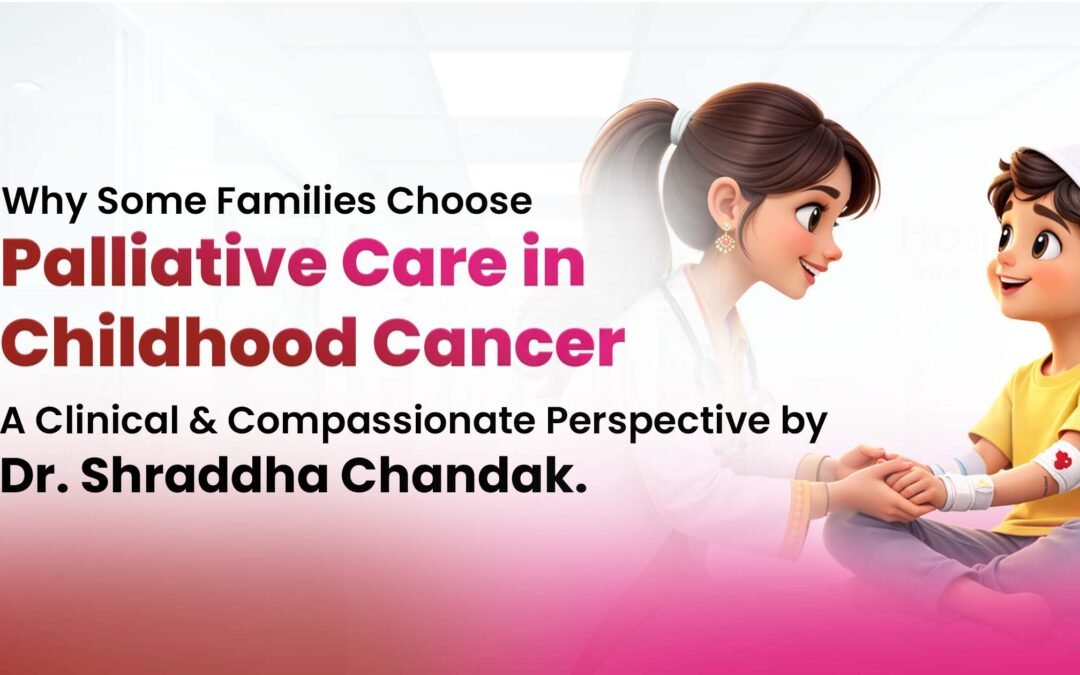
In paediatric oncology, every family hopes for cure, remission, and recovery. Modern advancements in childhood cancer treatment have improved survival rates significantly. However, there are situations where treatment options become limited, outcomes uncertain, or the burden of aggressive therapy outweighs potential benefit.
According to Dr. Shraddha Chandak, when families choose palliative care in childhood cancer, it is not a decision made out of defeat — it is often a decision made out of clarity, courage, and deep love.
Understanding the Shift in Treatment Goals
In some advanced or relapsed paediatric cancer cases, curative treatment may:
- Offer very limited success probability
- Cause severe side effects
- Require prolonged hospitalisation
- Significantly reduce quality of life
At this stage, the focus may shift from cure to comfort.
Palliative care becomes a way to prioritise:
- Pain management
- Emotional wellbeing
- Dignity
- Time spent meaningfully with family
This shift is not about abandoning care — it is about redefining care.

When Do Families Consider Palliative Care?
Families may consider palliative care when:
- Cancer has progressed despite multiple treatment lines
- The child’s body cannot tolerate further aggressive therapy
- Complications significantly affect daily comfort
- Doctors explain that further treatment is unlikely to change outcome
These decisions are never rushed. They are discussed in depth, with complete transparency.
The Emotional Weight Behind the Decision
Choosing palliative care in paediatric cancer is emotionally complex.
Parents often experience:
- Grief
- Guilt
- Fear of judgment
- Doubt about whether they are doing enough
Dr. Shraddha Chandak emphasises that such decisions are made only after careful evaluation of medical facts, risks, and the child’s comfort.
There is no “easy” choice in such circumstances — only thoughtful ones.
Prioritising Quality of Life
When treatment becomes more burdensome than beneficial, palliative care allows families to focus on:
- Managing pain effectively
- Reducing hospital stays
- Supporting emotional expression
- Preserving normalcy where possible
For some families, this means creating meaningful moments at home rather than continuing intensive hospital-based care.
The Role of the Medical Team
In such situations, the role of a paediatric haemato-oncologist extends beyond treatment.
Dr. Chandak works to:
- Provide honest, evidence-based information
- Support families emotionally
- Respect parental values and wishes
- Ensure the child remains comfortable
Ethical paediatric cancer care respects both medical science and family choice.
Addressing Social Stigma
Unfortunately, families who choose palliative care sometimes face societal misunderstanding.
Common misconceptions include:
- “They gave up too early.”
- “They did not try enough.”
In reality, these decisions are grounded in:
- Clinical evidence
- Risk-benefit analysis
- Compassion for the child’s suffering
It is important to recognise that every child’s cancer journey is unique.
Hope Does Not Disappear
Even when curative treatment stops, hope does not end.
Hope may shift toward:
- Pain-free days
- Emotional closeness
- Comfort
- Dignity
According to Dr. Shraddha Chandak, redefining hope is sometimes the most compassionate form of care.
Final Thought
Choosing palliative care in childhood cancer is one of the most difficult decisions a family can face. It requires strength, trust, and deep reflection.
From a clinical and compassionate perspective, palliative care is not about surrender — it is about ensuring that a child’s comfort, dignity, and emotional wellbeing remain protected, even when medicine reaches its limits.